Search This Blog

Showing posts with label county councils. Show all posts

Thursday, 1 September 2011

Do County Councils need NGA spelling out AGAIN?

Read more!

Once again, it would seem so, with Devon & Somerset's latest decision to use satellite (yes, you read that correctly) to deliver NGA.

This blog post can be read at 5tth.blogspot.com


Whilst I have no issues with satellite broadband as an infill technology similar to ADSL, neither can be termed as Next Generation Access even with the most dumbed down definition available. (And boy, are there a few of those doing the rounds!)

Devon & Somerset CC had £750k of RDPE funding for NGA, split into two lots. Lot 2 was for Exmoor and was withdrawn - which begs the question if the money has been earmarked to be spent elsewhere, as in Lancashire. Lot 1 - value £400k - was awarded to Satellite Solutions Worldwide.

Now, Devon and Somerset have BDUK funding to the tune of £30M for the region so one has to wonder whether the "built-in obsolence" of this RDPE funded project is deliberate, or political for longer term box-ticking aims. Or is the RDPE project quite simply a waste of money?

Whichever it is, it once again highlights the failure of County Councils to be the right body to administer such funds destined for NGA on behalf of the communities that need Next Generation, not stopgap solutions for ulterior motives. This is hardly the first time I have brought this up as regular readers know; each new announcement seems to further illustrate that County Councils quite simply do not have the wherewithal nor experience to make considered decisions on this subject.

This is not a rant against County Councils per se. The lack of this IT and broadband knowledge in-house at CCs was known long before these decisions were foisted upon them. It is one of the reasons the RDAs nurtured broadband/IT specialists and departments. Many of those people have seemingly found their way into County Councils; yet these decisions still keep coming - are the experts failing to be heard, p'raps?

There has been so much nambypambying over the years, with everyone trying desperately not to upset telcos, ministers, State Aid etc, or lose their coveted jobs and perks, whilst juggling with the complex reality that BROADBAND AFFECTS EVERY ASPECT OF OUR LIVES. This decision seems to be yet another one that confirms that UK broadband has truly lost its way in reaching any of the stated aims of this and preceding governments, the EU, let alone providing something that consumers and businesses could use to try to regain the path to economic recovery UK Plc so urgently needs to find.

We, or rather our 'elected bodies', seem amazingly willing to haemorrage our money on short-sighted projects in a way most businesses must and do find quite horrifying. Each of us as business owners could not even contemplate taking such risks with scarce capital without seriously considering the effect this will have on our businesses further down the line. Best value tests, due diligence, SWOT analysis, scenario planning, cost-benefit, etc - are these anathema to public sector?

On top of all this, one has to wonder at the growing prevalence of stories coming this way of existing companies or community networks being steamrollered out of existence by public money where they are ALREADY delivering services. I have been following one particular region (not Cumbria, so that should narrow it down for you!) since the announcement of the four pilot areas for BDUK funding, and am in regular contact with a company whose very existence, expansion plans and customer base are under threat by BDUK procurement in an area where NGA services of 100Mbps are already being delivered.

Devon and Somerset has similar companies, already delivering service, as do most other regions due to market failure, telco reluctance to invest, and this recurring theme of public funding being used inappropriately.

The failure of County Councils to engage with those commercially delivering service, let alone seemingly to be even aware of what is happening on their own patch, despite regular attempts to inform them of the existence of broadband services which will be threatened if misinformed decisions are made, further reinforces the growing feeling that we are now in the midst of a train crash.

Is it not time to reassess how we are spending what little money we have to achieve the stated NGA aims - which really are not that complicated? Where is the experienced business person advising the government on next gen broadband issues, who understands the impact broadband has across the board, and not just in ticking 2Mbps boxes? Is it really so damned difficult, even in the seeming absence of a business brain, to see from other countries who have gone wholeheartedly for FTTH strategies, what a difference this can make in social and economic impact?

As I wrote recently, every step of the FTTH walk is a challenge. We all know that, so why are we sticking our heads in the sand and our bums in the air, leaving us wide open for a good kick? We should be tackling the real problem head on and taking up the challenge, not pussy footing around it and delaying the start date, for year after year after year. It will not get any easier, only harder, leaving us ever further behind our competitors. Or are too many people in the UK content to do nothing (positive), oblivious to the fact that we are gifting our children's precious energies, time and any remaining resources clearing up after this train wreck we seem so determined to create for our next generation?


Read more!

Friday, 24 June 2011

Let's make IT simple in the Bit Society

Read more! Ah, another week hearing about, and seeing first hand, how few people get IT. So, let's encourage folks to catch up.....We have all these great IT and money-saving ideas out in the Big Society so let's share them.

This blog post can be read at 5tth.blogspot.com


1. Stop printing business cards to hand out willynilly to all and sundry. Print a few only and put a QR code on the back.

qrcode

That is the QR code for this website. Right click and save to promote the site!

Next time you meet me, I'll probably be wearing the QR code with my contact details. It may be on the bottom of my boots as I seem to be spending my life on either my knees or bum at the mo ;o)

(Want to make your own QR code?
Want to read a code on a smartphone? Use Scan on iphone or zxing on android - there are multiple others).

2. Stop printing out documents. Apparently some MPs have, to date, been able to get docs printed and couriered to them. Now, they have to read them online. Good. We all should read online where possible.
(However, the paperback version of Quakebook is now available on Amazon.co.uk and you *must* buy that!)

3. Much as we want to keep the Post Office afloat, do you really need to post that form/letter/document? Could you just email it instead? I spent an happy hour persuading my Council to email me all my Council Tax info instead of posting me it multiple times. The lovely IT man set to and it turned out the system could do precisely that. Hopefully, now, the potholes may move up a notch or two on the budget priority list with the spare money this could release if applied to every householder, before I fall off the Ducati.

4. Set up a website for your Parish Council, District Council etc that does not say ring this number on an expensive phone line to request a copy of xyz document. If we can use DropBox, so can our local government. This should be used in particular for planning applications where the amount of paper relating to a complex application could have been used to produce biomass for the buildings in the development for the coming year(s).

Further suggestions from you are welcome!!

Let's make IT simple in the BIT Society.


Read more!

Friday, 4 March 2011

State Aid Guidelines

Read more! Light reading for the weekend, folks! After last night's "Eden Valley Connective" broadband meeting with BDUK, I thought it was time to lay into the State Aid Guidelines.

This blog post can be read at 5tth.blogspot.com


It is going to be very important for those within the BDUK pilot areas to help those in Councils etc to make the right decisions. We can all only do that if we understand how State Aid will and does affect choices made. For instance, it would seem that "open access" is being translated to suit the bidders already, and not either the project or the end users.

In addition, it would seem very important that Councils et al are very clear about 51.

51. In assessing the proportional character of the notified measures in "white" or "grey" areas, through its decision-making practice, the Commission has highlighted a number of necessary conditions to minimise the State aid involved and the potential distortions of competition. The lack of any of the following conditions in (a) to (h) would require an in-depth assessment [51] and most likely it would lead to a negative conclusion on the compatibility of the aid with the common market.


So, a) for instance reads:

(a) Detailed mapping and coverage analysis: Member States should clearly identify which geographic areas will be covered by the support measure in question. By conducting in parallel an analysis of the competitive conditions and structure prevailing in the given area and consulting with all stakeholders affected by the relevant measure, Member States minimise distortions of competition with existing providers and with those who already have investment plans for the near future and enable these investors to plan their activities [52]. A detailed mapping exercise and a thorough consultation exercise ensure accordingly not only a high degree of transparency but serve also as an essential tool for defining the existence of "white", "grey" and "black" zones [53].


Mapping for instance is vital. At Penrith conference, the maps failed to include our own homegrown networks like Cybermoor, Gt Asby etc so maps must include ALL existing service providers, not just the big boys.

Communicating with existing service providers about their plans. Hm, we are already hearing from providers and communities who are getting increasingly concerned that their ongoing work could be totally distorted by BDUK intervention unless local authorities try much harder to discover what is going on in their areas. (This has been ongoing for a while, but many of those now getting in touch are not 'planning' to build something, they have already JFDI.)

This small example of a detailed and complex document gives some idea of what we are all up against.

There will be a short test on Monday on the rest of the Guidelines. ;o)

(Next week, we shall be studying the Framework Agreement).

Have a good weekend all. And just a reminder that rural areas, kids and advanced technology mix really well. I suspect we may see something similar in Stoneleigh as a school holiday course in years to come...
Read more!

Saturday, 2 October 2010

Comments on Cornwall

Read more!

It seems that the latest (supposedly) super-fast broadband tender has caused a huge furore. If you want to comment (named or anonymously) come and have your say, and join the throng. Are you a resident of Cornwall? How do you feel about the process and result? Are you a supplier in the South West? Are you a business in the Digital Peninsula? Were you involved in the tender process? Come and have your say on 5tth....

This blog post can be read at 5tth.blogspot.com


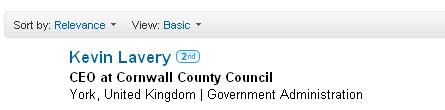
Oh, next week should be fun! I am trying to get hold of Kevin Lavery (ex-BT and now CEO of Cornwall Council - interestingly, or oddly, based in York according to LinkedIn).

If you have a question you would like to put to him, please add to the comments - you can post anonymously. This is not going to go away so....as I said previously....other areas, beware.
Read more!

Thursday, 4 March 2010

New national broadband campaign “The Final Third First” is launched today (Thursday 4 March).

Read more! The campaign - founded by a broad range of broadband organisations and champions of wider community interests - will lobby the Government to provide adequate and effective broadband access for the “Final Third” of the UK which currently lacks this vital infrastructure. The campaign will focus on ensuring that all those in the “Final Third” will be able to access Government online services by 2012 and then to facilitate the move towards next generation access.


Dr Charles Trotman of the CLA, who chaired the inaugural meeting, said: “The Government’s universal service commitment to provide broadband speeds of two megabits per second (Mbps) for all by 2012 will be hard to achieve. Those living in areas known as “the Final Third” still receive no proper access to broadband, putting them at a severe disadvantage. This campaign calls for faster action on the progress already made so that everyone can benefit from the Government’s increasing array of online services.”

Lloyd Felton, Director of County Broadband and founder of the rural communities self-help portal said:
"This will add significant weight to our efforts to connect Rural Communities, many of whom rightly claim to be more in need of better broadband than their urban counterparts".


Mike Kiely of www.BBBritain.co.uk said:
" No political party can be serious about transforming public service delivery unless the UK's high speed data transport infrastructure is available to all and capable of supporting key services predictably."


Aidan Paul, Chief Executive of Vtesse Networks and an active campaigner for the Final Third said
"Our own pilot projects (see www.vtesse.com/news.asp) are proving to us that with appropriate government attention to fibre rates and infrastructure sharing it would be possible to deliver super-fast broadband to the majority of final third residents and businesses. We welcome the additional focus that "The Final Third First" campaign will bring to the issue. One third of the population is a very large minority indeed and must not be forsaken by policy makers."


Christine Conder of Wray Community Communications (self funded Charity promoting the benefits of ICT to a rural community) said:
“Our best efforts are being undermined because the majority of the people around here can't get access to a decent broadband connection. We now represent and help well over 50 SMEs and over 500 homes and families who are struggling with dial up within a 12 mile radius of a city. Many are farmers and SMEs who need it for their business, and children who are getting detention because they can't download/upload homework. We fully support The Final Third First campaign.”


Guy Jarvis, Founder of NextGenUs UK CIC and CEO of FibreStream said:
“I am delighted to support the Final Third First campaign and believe that by focusing on this single political issue then those millions of our fellow citizens currently most Digitally Disadvantaged stand to reap the benefits of the coming 4th Utility, the eNdGAme of World-Class Digital FiWi Services. It is to be hoped that FTF campaign will also act as a driver for the Nation as a whole to swiftly attain and then maintain an enduring World leading telecommunications utility, fit for 21st century purpose, that puts people first.”


Glenn Peacey of Hampshire County Council said:
"Rural broadband is a key part of ensuring the long term economic and social viability of rural communities. Access to the internet enables rural communities to compete on an equal footing with urban centres, enabling smarter/flexible working from home which reduces the tendency towards dormitory villages, increases spending in local shops and pubs and reduces CO2 emissions and road congestion. High speed broadband also has a significant impact on social sustainability, not only does it enable residents to access leisure and media services which they would otherwise be excluded from or have to travel to consume, broadband also facilitates access to online education and learning resources which are so vital to today's school and university students."


Daniel Yates, Managing Director, Pitchup.com says “Without adequate broadband provision, rural businesses can't market themselves and engage with customers effectively in the increasingly important online environment. With online booking rates running at over 30%, smaller businesses in remote locations - including many that are vital to fostering UK tourism - are disadvantaged against larger companies.”

Neil Blake for Ewelme Parish Council, Oxon said:
“Public sector websites now take good access for granted. Those responsible should revert to dial-up for a month and watch their children flounder for their course-work, their businesses stagger, and their VAT, tax, social services and DVLA transactions revert to Royal Mail. That is the issue not 50 miles from Westminster. E-government is a good policy but its deployment is socially flawed.”


End

Notes to Editors

1. The founding members of The Final Third First Campaign are: Country Land and Business Association, Digital Dales, Neil Blake (Ewelme Parish Council), Wray Community Communications, Pitchup.com, Vtesse Networks, Rutland Telecom, Broadband Britain, County Broadband, Richard Hull (Chair 3-C Ltd and RATS Ltd), Bob Franklin (Teleconsulting.co.uk), Community Lincs.

2. If you wish to join the Final Third First campaign please contact Charles Trotman (charles.trotman@cla.org.uk)

3. For further information, please contact Charles Trotman on 0207 460 7939


Fiberevolution are also involved through Digital Dales and would ask that everyone shares the information about this new organisation to ensure maximum coverage for such a vital campaign.
Read more!